

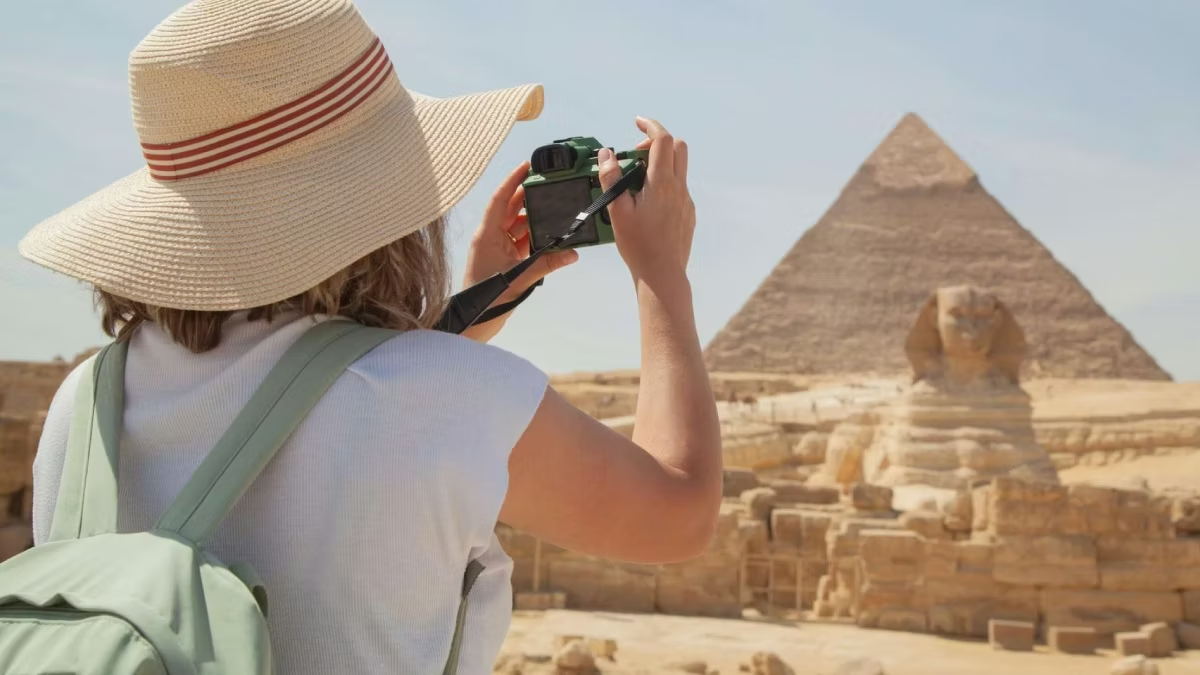
Best Photo Spots at the Pyramids of Giza — Viewpoints, Timing & Tips 2026

The best photography viewpoint at the Pyramids of Giza is the panoramic desert viewpoint south of the complex, from which all three pyramids align in a row — this is the iconic image of Giza. The second-best position is the south-east of the Sphinx, where the Sphinx appears in the foreground with Khafre’s pyramid rising directly behind it. Both positions are best photographed in early morning (8:00–10:00 AM) or late afternoon (3:00–5:00 PM) golden light, when the sun angle produces dramatic shadows and warm tones on the pale limestone.
The Pyramids of Giza are one of the most photographed places on earth — and also one of the most frequently photographed badly. The challenge is not the subject matter but the approach: the plateau is large, the light changes dramatically across the day, and the most famous angles require knowing where to stand. This guide gives you the exact positions, the best times for each, and practical tips to come away with photographs that actually reflect what it is like to be here.
Understanding the Light at Giza
Before diving into specific viewpoints, the single most important photography decision at Giza is timing. The plateau is oriented so that the pyramids face primarily north and east. This means:
Morning light (8:00–10:00 AM): Low, warm light from the east illuminates the eastern faces of the pyramids and the front of the Sphinx directly. The desert haze has not yet built up. Shadows are long and dramatic, emphasising the stepped texture of the pyramid faces. This is the best overall photography window.
Midday (10:00 AM–2:00 PM): Harsh overhead light flattens the pyramid faces, washes out colour, and creates unflattering shadows. Avoid as a primary photography window if you have a choice.
Late afternoon (3:00–5:00 PM): The setting sun from the west illuminates the western and southern faces of the pyramids in warm amber tones. The Sphinx’s face falls into shadow, but the overall plateau scene becomes atmospheric and golden. The panoramic viewpoint is particularly beautiful at this time. Crowds also thin in the final hours before closing.
Sunrise: The Giza complex does not offer ticketed access before 8:00 AM, so sunrise photography from within the site is not possible for standard visitors. The best sunrise views of the pyramids are from elevated positions in the surrounding city — hotel rooftops and the elevated expressway approaches offer this angle.
Sunset: Similarly, the site closes at 5:00 PM. Late afternoon light is the in-site equivalent — the quality of the light in the final hour before closing approaches sunset warmth, particularly in winter when the sun sets earlier and lower.
The 6 Best Photo Spots
1. The Panoramic Desert Viewpoint
What it shows: All three pyramids — Khufu, Khafre, and Menkaure — aligned in a single frame from left to right, with open desert in the foreground and Cairo’s suburbs visible in the far distance.
Where it is: South of the main complex, accessible by the internal site road or a 20-minute walk south from the Great Pyramid. Most guided tours include a stop here; it is sometimes called the “panoramic point” or “camel viewpoint” in tour descriptions.
Best time: Early morning (8:00–10:00 AM) for the cleanest light and fewest people. Late afternoon (3:00–5:00 PM) for warm golden tones. Avoid midday entirely.
Photography tips: Use a wide-angle lens or your phone’s standard lens — telephoto compression distorts the relative sizes of the three pyramids in ways that misrepresent the scene. Include the desert foreground to give scale. If you are on a tour, this is where camel rides are offered — a camel silhouette in the foreground against the three pyramids is the most iconic single image of Giza.
Crowd management: This is the busiest photography spot on the plateau, particularly between 9:30 AM and 11:30 AM when tour groups arrive. If you are there at 8:00 AM, you may have the viewpoint largely to yourself.
The panoramic desert viewpoint is located south of the main Giza complex, approximately 1.5 km from the main entrance gate. It is accessible by the internal site road (all tour vehicles stop here) or on foot — a 20-minute walk south from the Great Pyramid following the western edge of the plateau. It is included within the general area entry ticket.
2. The Sphinx — South-East Position
What it shows: The Great Sphinx in three-quarter profile facing right, with the Pyramid of Khafre rising directly behind and above it — the two monuments that are most directly connected compositionally and historically.
Where it is: From the Sphinx enclosure lower terrace, walk to the south-east corner. The angle puts you at approximately 45 degrees to the Sphinx’s face with Khafre’s pyramid centred behind it.
Best time: Late afternoon (3:00–4:30 PM) when the setting sun illuminates the west-facing pyramid face and the Sphinx’s left side. Morning also works — the light hits the Sphinx’s face directly.
Photography tips: The Sphinx is larger than most people expect — use a wider lens than you think you need to capture both the full statue and the pyramid behind it. From the lower terrace level, a wider angle includes the foreground paws, which are approximately 15 metres long and add scale. From the upper terrace, a slightly longer focal length isolates the face and pyramid more cleanly.
3. The Eastern Face of the Great Pyramid
What it shows: The Great Pyramid at close range from below — the ascending stone courses filling the frame from base to summit, with the three Queens’ Pyramids of Khufu arranged in a row extending to the right.
Where it is: Walk east from the main entrance area of the Great Pyramid to the eastern face. The Queens’ Pyramids extend southward from here.
Best time: Morning (8:00–10:00 AM) when the eastern face is directly lit.
Photography tips: This position produces the best close-range scale shots — stand at the base and point the camera upward to show the full height of the pyramid face. The row of three Queens’ Pyramids receding to the south makes a compelling supporting element in wider compositions.
4. The Causeway Between Khafre’s Mortuary Temple and Valley Temple
What it shows: The roofless causeway that connects Khafre’s Mortuary Temple (at the pyramid base) to his Valley Temple (near the Sphinx) — a stone corridor that once was covered and formed the processional route for the pharaoh’s funeral. Looking north along the causeway shows the pyramid rising directly at its head.
Where it is: South-east of Khafre’s main pyramid, descending toward the Sphinx enclosure.
Best time: Morning for the clearest light along the causeway axis.
Photography tips: A moderate telephoto lens (50–85mm equivalent) compresses the causeway walls and draws the pyramid closer, creating a sense of being drawn toward the monument. The ancient stone texture of the walls is a strong foreground element in close shots.
5. The Queens’ Pyramids — Looking North
What it shows: The three Khufu Queens’ Pyramids in a row, with the Great Pyramid rising dramatically behind them. This perspective makes the size difference between the subsidiary pyramids and the main pyramid immediately legible.
Where it is: East of the Great Pyramid, from the eastern end of the Queens’ Pyramid row, looking northwest.
Best time: Morning (8:00–10:00 AM) when light falls on the east faces of all four structures simultaneously.
Photography tips: Position yourself at the far southern end of the Queens’ Pyramid row and use a moderate wide angle. Including all three smaller pyramids in the foreground with Khufu rising behind them creates the strongest scale comparison.
6. The Valley Temple Interior (Khafre)
What it shows: The interior of Khafre’s Valley Temple — massive pink granite walls and the T-shaped hall where 23 statues of Khafre once stood. This is one of the best-preserved Old Kingdom architectural interiors accessible to visitors.
Where it is: Directly behind (west of) the Sphinx enclosure, entered from the Sphinx area.
Best time: Any time — the interior is partially shaded. Midday is acceptable here when the outdoor heat is most intense.
Photography tips: The interior is dimly lit by natural light through the original T-shaped ceiling openings. Allow your camera to adjust to the lower light rather than using flash, which flattens the granite texture. Wide-angle shots down the hall length capture the monumental scale of the space.
Practical Photography Tips
Carry a lens cloth: The sandy environment generates fine dust that settles on camera lenses and phone screens. A small cloth in your pocket makes a significant difference to image clarity across a long visit.
Use portrait mode carefully: Portrait mode on smartphones can blur the pyramid faces when they are large in the frame, producing an unnatural effect. For wide shots of the monuments, turn portrait mode off.
Shoot in RAW if your camera allows: The high contrast between pale limestone and deep blue sky at Giza compresses badly in JPEG format — RAW files give you significantly more latitude to recover both sky detail and shadow detail in editing.
The crowds are part of the story: Trying to eliminate all people from your photographs at Giza during peak hours is a losing battle. Embrace the scale — a lone figure walking along the base of the Great Pyramid demonstrates scale better than any wide shot without people.
For professional results, hire a local photographer: Several licensed photographers operate at the Giza Plateau who know every angle, know how to negotiate access for the best positions, and can produce genuinely exceptional results. If photography is the primary purpose of your visit, this is worth considering.
For everything you need to plan the timing of your visit around photography, see our best time to visit guide. For practical advice on what to carry, see our what to bring guide.
Frequently Asked Questions
What is the best viewpoint for photographing all three pyramids together?
The panoramic desert viewpoint south of the main complex is the best position for capturing all three pyramids — Khufu, Khafre, and Menkaure — aligned in a single frame. It is approximately 1.5 km from the main entrance gate and is included within the general area entry ticket. Most guided tours make a scheduled stop here, and camel rides are offered at this location for foreground interest.
What time of day produces the best light for pyramid photography?
The best photography window is early morning from 8:00 to 10:00 AM, when low eastern light illuminates the pyramid faces and Sphinx directly, shadows are long and dramatic, and desert haze has not yet built up. Late afternoon from 3:00 to 5:00 PM is the second-best window, offering warm amber tones on the western and southern faces. Midday from 10:00 AM to 2:00 PM produces harsh overhead light that flattens the pyramid faces and should be avoided if possible.
Can you photograph the Pyramids of Giza at sunrise or sunset?
Standard ticketed access to the Giza complex does not begin before 8:00 AM and the site closes at 5:00 PM, so true sunrise and sunset photography from within the plateau is not possible for most visitors. For sunrise views, hotel rooftops and elevated expressway approaches in the surrounding city offer good angles. For sunset-quality light, the final hour before the 5:00 PM closing — particularly in winter when the sun sets earlier — produces warm tones that closely approach sunset conditions.
Where is the best position to photograph the Sphinx with a pyramid behind it?
The south-east corner of the Sphinx enclosure lower terrace is the optimal position, placing you at roughly 45 degrees to the Sphinx’s face with the Pyramid of Khafre rising directly behind it. Late afternoon from 3:00 to 4:30 PM is the best time, when the setting sun illuminates the west-facing pyramid face. From the lower terrace level, include the Sphinx’s foreground paws — which are approximately 15 metres long — to communicate the statue’s true scale.
When is the panoramic desert viewpoint least crowded?
Arriving at 8:00 AM when the site opens gives you the panoramic viewpoint largely to yourself, as the main rush of tour groups arrives between 9:30 and 11:30 AM. Crowds also thin in the final hour before the 5:00 PM closing, making late afternoon a viable second option. If you are on a guided tour you cannot usually control the timing, but independent visitors gain a significant advantage by arriving at opening time.
What focal length or lens works best for photographing the pyramids?
A standard or wide-angle lens (roughly 24–35mm equivalent) works best at the panoramic viewpoint, where telephoto compression distorts the relative sizes of the three pyramids in ways that misrepresent the scene. A moderate telephoto of 50–85mm equivalent is useful along Khafre’s causeway, where compression draws the pyramid closer and creates a strong sense of depth. For close-range scale shots at the base of the Great Pyramid, a wide angle pointed upward captures the full ascending stone courses from base to summit most effectively.
Is photography permitted inside the Valley Temple at Giza?
Photography is permitted inside Khafre’s Valley Temple, which sits directly west of the Sphinx enclosure and is one of the best-preserved Old Kingdom architectural interiors accessible to visitors. The interior is lit by natural light through original T-shaped ceiling openings, so flash is not needed and will flatten the pink granite texture if used. Midday is an acceptable time to visit the Valley Temple interior, making it a useful option when outdoor light conditions are unfavourable for the open-air viewpoints.
