

Best Time to Visit the Pyramids of Giza (By Month, Season & Time of Day)

The best time to visit the Pyramids of Giza is between October and April, when temperatures are cooler and more manageable. Within a single day, arriving at opening time (8:00 AM) gives you the lightest crowds and the most comfortable conditions before the midday heat sets in. December and January are the peak tourist months — great weather, but expect larger crowds. Late spring and early autumn offer an ideal balance of comfortable temperatures and fewer visitors.
The Pyramids of Giza are one of the most visited ancient wonders in the world, welcoming millions of tourists each year to the Giza Plateau on the outskirts of Cairo. Unlike indoor attractions, your experience here is shaped almost entirely by two external factors: heat and crowds. Get both right and you’ll have one of the most memorable days of your life. Get them wrong and it becomes an endurance test under the Egyptian sun.
This guide breaks down the best time to visit the Pyramids of Giza by time of day, day of week, month, and season — so you can plan a visit that works for your schedule, your budget, and your tolerance for heat.
Best Time of Day to Visit the Pyramids of Giza
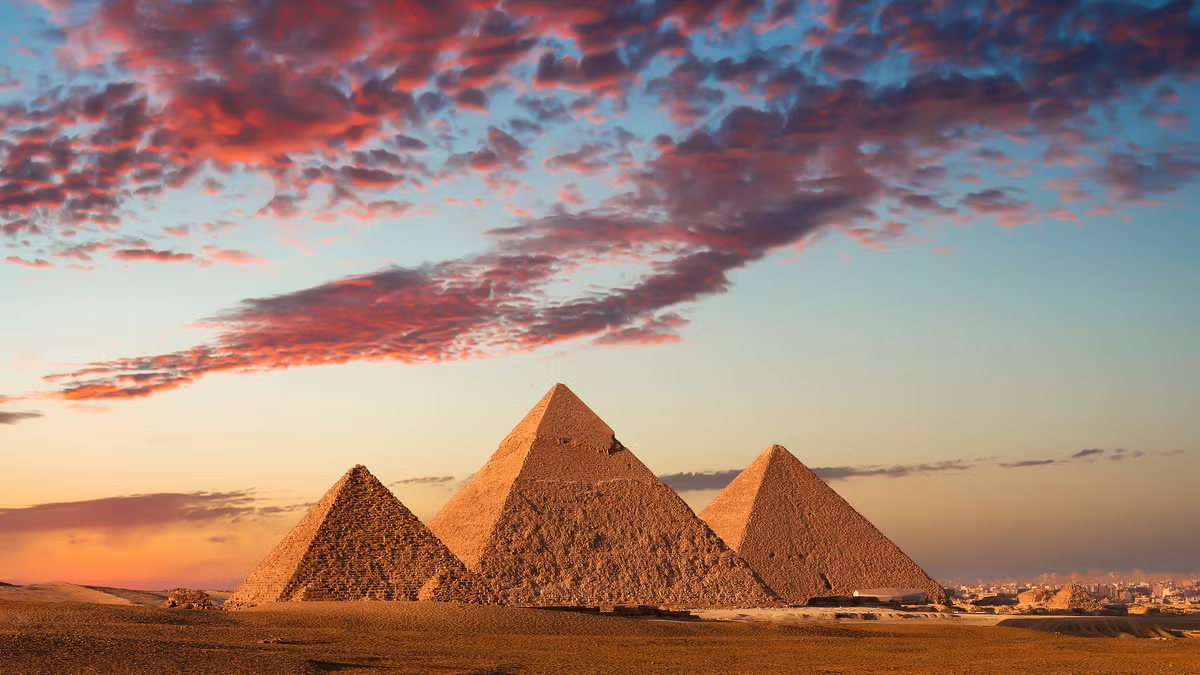
The best time of day to visit the Pyramids of Giza is right at opening, 8:00 AM. Crowds are thinnest, the light is beautiful for photography, and temperatures are at their most comfortable before the midday sun peaks. The second-best window is late afternoon from around 3:00 PM, when tour groups begin to leave and the golden-hour light makes for stunning photographs.
The Giza complex opens at 8:00 AM and closes at 5:00 PM (with reduced hours during Ramadan — see our guide to Pyramids of Giza opening hours). The rhythm of the day follows a predictable pattern:
8:00 AM – 10:00 AM: This is the golden window. Crowds are light, the air is still cool, and the low morning sun casts long, dramatic shadows across the plateau. Guided tour buses and large group visits typically arrive from 9:30 AM onwards, so the earlier you arrive, the better.
10:00 AM – 2:00 PM: Peak hours. Tour groups are in full flow, temperatures reach their daily high, and the queues at popular spots — especially around the Great Pyramid entrance and the Sphinx viewpoint — are at their longest. This is the period most visitors find most challenging, particularly in summer.
2:00 PM – 3:00 PM: A slight mid-afternoon lull. Many day-trip visitors have finished their tours and moved on, but the heat is still intense outside the cooler months.
3:00 PM – 5:00 PM: The second-best window. Crowds thin out considerably as tour buses depart, temperatures start to ease (especially in spring and autumn), and the afternoon light becomes truly spectacular. If you’re serious about photography at the Pyramids of Giza, this is when you want to be on the plateau. Check our guide to the best photo spots at the Pyramids of Giza for exact viewpoint recommendations.
Best Day of the Week to Visit
There is no universally “bad” day to visit the Pyramids of Giza, but there are meaningful differences depending on how you plan to get there and what type of crowds you’re comfortable with.
Friday and Saturday tend to be busier at the Giza complex itself, as these are the Egyptian weekend days and local visitors combine with international tourists. If avoiding local day-trippers matters to you, Tuesday through Thursday tends to be slightly quieter.
Sunday can be surprisingly manageable. Many European tour groups operate on Monday-to-Friday schedules, and organised tours departing from resorts in Hurghada and Sharm El Sheikh tend to cluster on specific days. If you’re visiting from a Red Sea resort, check your tour provider’s schedule — tours from Hurghada to Giza by flight, for example, often run on fixed days of the week.
The difference between the busiest and quietest weekday is moderate rather than dramatic — the more impactful variable is always the time of year.
Best Time of Year to Visit the Pyramids of Giza
October to April is the best time of year to visit the Pyramids of Giza. Temperatures are comfortable, ranging from around 14°C to 26°C (57°F to 79°F), making outdoor exploration genuinely pleasant. May through September brings intense heat — regularly exceeding 35°C (95°F) — which makes extended outdoor time physically demanding, particularly around the exposed Giza Plateau where there is virtually no shade.
October to April — Peak Tourist Season (Best for Most Visitors)
This six-month window is when the Pyramids of Giza are at their most accessible and enjoyable for international visitors. The cooler, drier air makes walking between monuments comfortable, photography is excellent in every season, and you can spend a full day on the plateau without heat becoming a limiting factor.
December and January are the most popular months. Cairo sees large numbers of visitors during the European and North American winter holidays, and while the weather is ideal — cool mornings, warm afternoons — you should expect the Giza complex to be noticeably busier than at other times. Book your tickets and tours in advance during this period.
February and March offer an excellent balance. Crowds are slightly lower than the December–January peak, temperatures are very comfortable, and spring light gives the limestone monuments a warm, golden quality.
October and November are arguably the sweet spot for experienced travellers. The summer tourist season has wound down, temperatures have dropped to comfortable levels (typically 20°C–28°C / 68°F–82°F), and crowd levels are noticeably lower than the winter peak.
May and September — Shoulder Season
These months sit at the edges of the hot season. Temperatures are rising (May) or beginning to ease (September), but both months can still see highs above 30°C (86°F). They’re manageable if you plan your visit carefully around the early morning window and avoid the 11:00 AM–3:00 PM heat peak.
June, July, and August — Summer (Hottest Months)
Summer in Cairo is intense. Temperatures regularly reach 38°C–40°C (100°F–104°F) on the Giza Plateau, and the site offers almost no shade between monuments. If summer is your only option, visiting right at 8:00 AM opening is essential, wearing appropriate sun protection is non-negotiable (see our guide on what to bring to the Pyramids of Giza), and you should plan to leave the site by around 11:00 AM before the worst of the heat sets in.
Paradoxically, summer can mean slightly lighter international tourist crowds since many visitors deliberately avoid the heat — but the overall experience is more physically demanding.
Ramadan Considerations
The timing of Ramadan shifts each year according to the Islamic lunar calendar. During Ramadan, the Giza complex adjusts its opening hours, and the surrounding area — including cafés, restaurants, and some support services — operates differently. Visiting during Ramadan is entirely possible and offers a fascinating cultural dimension to any trip to Egypt, but it does require extra planning around food, water, and logistics.
Month-by-Month Summary
| Month | Avg High Temp | Crowd Level | Verdict |
|---|---|---|---|
| January | 19°C / 66°F | High | Great weather, busiest month |
| February | 21°C / 70°F | Medium-High | Excellent — highly recommended |
| March | 25°C / 77°F | Medium | Very good, spring colours |
| April | 29°C / 84°F | Medium | Good, warming up |
| May | 34°C / 93°F | Low-Medium | Hot, early starts essential |
| June | 37°C / 99°F | Low | Very hot, demanding |
| July | 38°C / 100°F | Low | Hottest month, challenging |
| August | 38°C / 100°F | Low | Hottest month, challenging |
| September | 35°C / 95°F | Low-Medium | Easing heat, quieter |
| October | 30°C / 86°F | Medium | Sweet spot — recommended |
| November | 25°C / 77°F | Medium | Excellent all round |
| December | 21°C / 70°F | High | Great weather, busy period |
Planning Tips for Every Season
Cool season (Oct–Apr): Book tickets and guided tours in advance, particularly for December and January. While you won’t face extreme heat, you will face crowds — arriving at 8:00 AM gives you the best start.
Hot season (May–Sep): Plan to be on site from 8:00 AM and aim to see the main monuments — the Great Pyramid, Khafre, Menkaure, and the Sphinx — before noon. Carry at least 1.5 litres of water per person, wear lightweight clothing, and use high-SPF sun protection. A hat and sunglasses are essential. See our full what to bring guide for a complete packing list.
Families with children: The cool season is strongly recommended when travelling with younger children. The heat in summer can make extended outdoor visits impractical for young visitors. See our guide to visiting the Pyramids of Giza with kids for family-specific planning advice.
Frequently Asked Questions
What is the best month to visit the Pyramids of Giza?
October and November are widely considered the sweet spot — temperatures drop to a comfortable 20°C–28°C (68°F–82°F) and crowds are noticeably lower than the December–January peak. February and March are also excellent, offering ideal conditions with slightly fewer visitors than the winter holiday rush.
What time of day should I arrive at the Pyramids of Giza to avoid crowds?
Arrive right at opening time — 8:00 AM — for the lightest crowds and the most comfortable temperatures before the midday heat peaks. Large guided tour groups typically begin arriving from 9:30 AM onwards, so the first 90 minutes after opening offer the most peaceful experience on the plateau.
Is it worth visiting the Pyramids of Giza in summer?
It is possible but physically demanding — temperatures on the exposed Giza Plateau regularly reach 38°C–40°C (100°F–104°F) in July and August, with virtually no shade between monuments. If summer is your only option, plan to arrive at 8:00 AM and leave by around 11:00 AM before the worst heat sets in, and carry at least 1.5 litres of water per person.
Which days of the week are quietest at the Pyramids of Giza?
Tuesday through Thursday tends to be slightly quieter than the Egyptian weekend days of Friday and Saturday, when local visitors combine with international tourists. That said, the time of year has a far greater impact on crowd levels than the day of the week.
How does Ramadan affect a visit to the Pyramids of Giza?
During Ramadan the Giza complex adjusts its opening hours, and surrounding cafés, restaurants, and some support services operate differently. Visiting is entirely possible and offers a rich cultural dimension, but requires extra planning around food, water access, and logistics — check the site’s official hours before you go as Ramadan shifts each year with the Islamic lunar calendar.
