

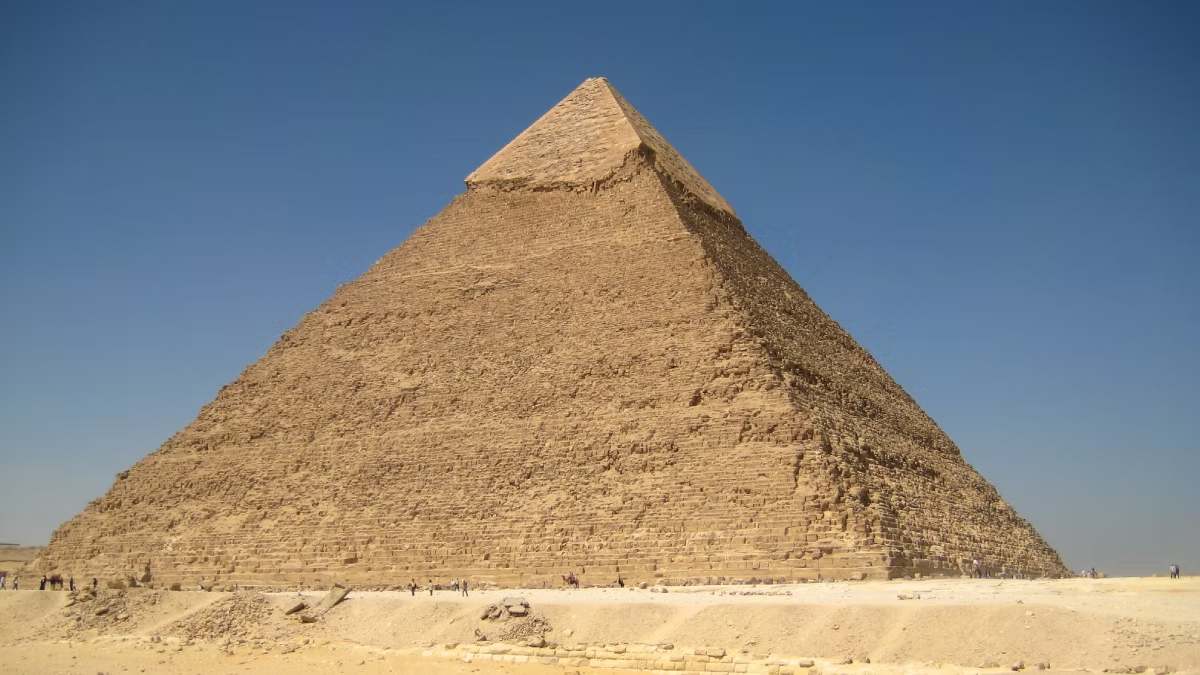
Pyramid of Khafre — History, Facts & Complete Visitor Guide 2026

The Pyramid of Khafre is the second-largest pyramid at Giza, built for Pharaoh Khafre (son of Khufu) around 2530 BC. It stands 136 metres tall and appears taller than the Great Pyramid from most viewpoints because it sits on higher ground. Its most distinctive feature is the band of original white limestone casing stones still visible at its apex — the only major pyramid at Giza to retain any of its original outer casing. The interior is open to visitors with a separate ticket (EGP 750 for foreign adults). Khafre is also credited with building the Great Sphinx.
The Pyramid of Khafre is the one that fools you. From most positions on the Giza Plateau, it appears to be the largest of the three — its summit seems to rise higher than the Great Pyramid of Khufu beside it. The illusion is deliberate: Khafre built his pyramid on a slightly elevated section of the plateau, knowing that the higher ground would make his monument appear to rival his father’s. It is the most visually striking pyramid at Giza, and the gleaming white limestone cap at its peak — the only major pyramid at Giza to retain any of its original outer casing — makes it instantly identifiable from miles away.
Key Facts
| Fact | Detail |
|---|---|
| Pharaoh | Khafre (also known as Chephren) |
| Dynasty | Fourth Dynasty, Old Kingdom |
| Built | c. 2570–2530 BC |
| Original height | 143.5 metres |
| Current height | 136.4 metres |
| Base length | 215.5 metres per side |
| Original casing | Partially preserved at apex |
| Interior access | Yes (separate ticket required) |
| Associated monument | The Great Sphinx |
History and Context
Khafre was the son of Khufu and the fourth pharaoh of Egypt’s Fourth Dynasty. He ruled for approximately 26 years and commissioned not only his pyramid but the entire complex that includes the Valley Temple, the Sphinx Temple, the causeway, and — in all likelihood — the Great Sphinx itself, whose face is widely believed to be a portrait of Khafre.
Khafre’s pyramid complex is the most complete of the three main Giza complexes. Unlike the Great Pyramid, whose associated temples have been largely destroyed, Khafre’s Valley Temple survives in good condition — its massive granite walls and T-shaped interior give a clear sense of the monumental scale of Old Kingdom temple architecture. The causeway connecting the Valley Temple to the Mortuary Temple at the pyramid’s base is also partially preserved.
The choice of elevated ground for Khafre’s pyramid was both practical and symbolic. Practically, it reduced the amount of stone required to achieve the desired height. Symbolically, it placed Khafre’s tomb at the most visually prominent point on the plateau — a deliberate assertion of royal power.
The Limestone Cap: What Remains of the Original Casing
One of the most significant features of the Pyramid of Khafre is the band of original white Tura limestone casing stones preserved near its apex. These are the same material that once covered all three Giza pyramids completely, giving them a smooth, gleaming white surface visible from the Nile Delta on clear days. Over the centuries, the casing stones were systematically stripped from most Egyptian pyramids and used as building material in Cairo — but Khafre’s apex casing survived, giving modern visitors the only direct visual sense of how the pyramids originally appeared.
The Interior: What Is Inside
The Pyramid of Khafre has a simpler interior than the Great Pyramid — a single descending passage leading to the burial chamber, without the Grand Gallery or multiple chambers found in Khufu’s pyramid. The burial chamber is cut partly into the bedrock beneath the pyramid and partly into the pyramid’s masonry. It contains the original granite sarcophagus — still in place, though empty, as Khafre’s mummy has never been found.
The interior of the Pyramid of Khafre is accessible with a separately purchased ticket (EGP 750 for foreign adults). The passage descends at a steep angle and then levels to the burial chamber. The space is lower and less architecturally dramatic than the Great Pyramid’s interior, but the presence of the original granite sarcophagus — far larger than any passage through which it could have been moved — gives the same immediate sense of the pyramid built around its contents. Physically less demanding than the Great Pyramid interior, though still requiring comfortable mobility.
The Great Sphinx: Khafre’s Legacy
The Great Sphinx of Giza — a 73-metre-long, 20-metre-tall figure with a human head and lion’s body — is located directly east of Khafre’s Valley Temple and is almost certainly associated with Khafre’s reign. The face of the Sphinx, based on proportional analysis of the facial features against known portraits of Old Kingdom pharaohs, is widely considered to be Khafre himself — making it simultaneously a divine guardian of the necropolis and a royal portrait.
The Sphinx was carved from a natural limestone outcropping left after quarrying operations for the pyramid — an act of opportunistic genius that transformed a rocky knoll into one of the most recognisable sculptures in human history. For a full guide to the Sphinx, see our Great Sphinx of Giza visitor guide.
Visiting the Pyramid of Khafre
The Pyramid of Khafre is included in the general area entry ticket for the Giza Plateau. The interior requires a separate ticket purchased at the site ticket office.
Recommended approach: Walk from the Great Pyramid south-west along the plateau to Khafre’s base — approximately a 5–8 minute walk. The best exterior photographs of Khafre are taken from the north-east, where the pyramid’s relationship to the Great Pyramid and the limestone cap are both visible. From the south side, the causeway leading down to the Valley Temple is accessible and worth following — it leads directly to the Sphinx enclosure.
Best viewpoint: The panoramic desert viewpoint south of the complex shows Khafre prominently in the centre of the three-pyramid row, appearing the tallest due to its elevated position. This is the most photographed single angle at Giza. See our best photo spots guide for the precise location.
Interior visit duration: Allow 20–30 minutes for the interior visit if you choose to enter — the single passage and burial chamber are covered relatively quickly.
Frequently Asked Questions
Is the Pyramid of Khafre taller than the Great Pyramid?
No — the Great Pyramid of Khufu is taller, standing at approximately 138.5 metres compared to Khafre’s current height of 136.4 metres. However, Khafre built his pyramid on elevated ground, so from most viewpoints on the Giza Plateau it appears to be the tallest of the three pyramids.
Can you go inside the Pyramid of Khafre?
Yes, the interior of the Pyramid of Khafre is open to visitors with a separately purchased ticket costing EGP 750 for foreign adults. The interior consists of a single descending passage leading to a burial chamber that contains the original granite sarcophagus, still in place. Allow 20–30 minutes for the interior visit.
Why does the Pyramid of Khafre still have a white top?
The white band near the apex is original Tura limestone casing — the same smooth white stone that once covered all three Giza pyramids completely. Over the centuries, casing stones were stripped from most Egyptian pyramids and reused as building material in Cairo, but the upper portion of Khafre’s casing survived, making it the only major pyramid at Giza to retain any of its original outer covering.
Did Khafre build the Great Sphinx?
Almost certainly yes — the Great Sphinx sits directly east of Khafre’s Valley Temple and was most likely commissioned during his reign, around 2530 BC. The face of the Sphinx is widely believed to be a portrait of Khafre himself, based on proportional comparisons with known Old Kingdom royal portraits. The Sphinx was carved from a natural limestone outcropping left over from quarrying operations for Khafre’s pyramid complex.
Who was Pharaoh Khafre?
Khafre (also known as Chephren) was the son of Khufu and the fourth pharaoh of Egypt’s Fourth Dynasty, ruling for approximately 26 years around 2570–2530 BC. He commissioned not only his pyramid but an entire complex including the Valley Temple, Sphinx Temple, causeway, and the Great Sphinx. His Valley Temple is one of the best-preserved Old Kingdom temples in Egypt.
What is the best viewpoint for photographing the Pyramid of Khafre?
The best exterior photographs are taken from the north-east, where both the pyramid’s relationship to the Great Pyramid and the white limestone cap at the apex are visible simultaneously. The panoramic desert viewpoint south of the complex is the most photographed single angle at Giza — from there, Khafre appears prominently in the centre of the three-pyramid row and looks the tallest due to its elevated position.
Is the Pyramid of Khafre included in the general Giza entry ticket?
The exterior of the Pyramid of Khafre is included in the general Giza Plateau entry ticket. Access to the interior requires a separate ticket, which costs EGP 750 for foreign adults and must be purchased at the on-site ticket office. The Valley Temple and causeway are accessible without an additional charge.
