

Solar Boat Museum at Giza — Khufu’s Ancient Ship: Visitor Guide 2026

The Solar Boat Museum at the Pyramids of Giza houses the fully restored Khufu Ship — a 43.6-metre cedarwood vessel discovered in 1954 in a sealed pit at the base of the Great Pyramid. It is one of the oldest and best-preserved wooden ships in the world, dating to approximately 2500 BC. The museum requires a separate ticket (EGP 100 for foreign adults) in addition to the general area entry ticket. It is open from 9:00 AM to 4:00 PM and is one of the most accessible attractions at Giza, with an elevator to the upper viewing level.
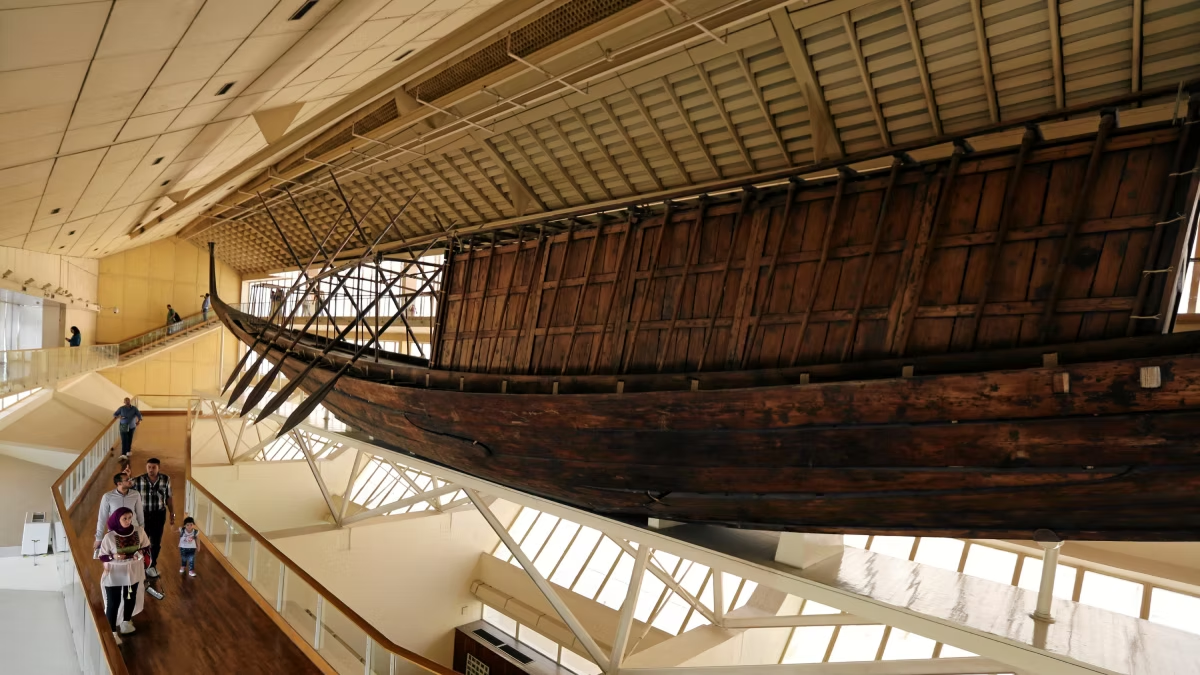
Hidden beside the southern face of the Great Pyramid, the Solar Boat Museum contains one of the most remarkable objects in Egypt — a 4,500-year-old wooden ship, perfectly preserved by the desert air for millennia, now fully restored and displayed in its entirety. It is not a fragment or a reconstruction: it is the actual ship, its 1,224 individual pieces painstakingly reassembled over a decade of conservation work, floating in the enclosed space of a purpose-built museum above the very pit in which it was found.
For many visitors, the Solar Boat is the most unexpectedly moving experience at Giza — more intimate than the overwhelming scale of the pyramids, and more immediately comprehensible as an object of human craftsmanship and ancient belief.
What Is the Khufu Ship?
The Khufu Ship is a full-scale ancient Egyptian vessel built for Pharaoh Khufu in approximately 2500 BC — the same pharaoh who commissioned the Great Pyramid. It was discovered in May 1954 by Egyptian archaeologist Kamal el-Mallakh, sealed in an air-tight limestone pit on the south side of the Great Pyramid, covered by 41 roofing blocks weighing approximately 16 tonnes each.
The Khufu Ship was discovered dismantled — its 1,224 pieces of Lebanese cedar, acacia, and sidder wood packed into the pit in 13 layers. The ship was reassembled between 1957 and 1971 by master carpenter Haj Ahmed Youssef Mustafa in a process that took nearly 14 years. The completed vessel measures 43.6 metres in length, 5.9 metres in beam, and weighs approximately 45 tonnes. It is the oldest intact ship ever discovered and one of the best-preserved wooden objects from the ancient world.
The precise purpose of the ship is debated. Three main theories exist: it was used to transport Khufu’s body across the Nile from the east bank (where he died) to the west bank (where he was buried); it was a “solar barque” for the pharaoh’s journey through the underworld in the afterlife; or it served as a ceremonial vessel during Khufu’s lifetime. Physical evidence — worn planks, traces of repair work, and organic matter consistent with river use — suggests it may have been a functional river vessel before being ritualised and buried.
The Museum
The Solar Boat Museum was originally built in 1982 directly over the pit in which the ship was found. A second sealed pit adjacent to the first was discovered at the same time and excavated between 2008 and 2013 by a joint Egyptian-Japanese team — the second boat’s fragments are currently under study.
Access: The museum has a paved approach from the south side of the Great Pyramid. An elevator provides access to the upper viewing gallery — making this one of the most accessible attractions at Giza. See our accessibility guide for full site accessibility information.
What to see: Allow 30–45 minutes. The ship itself is the dominant object — at 43.6 metres, it fills the museum’s upper gallery. Walk the full length of the gallery to appreciate the scale, the construction details (the planks are lashed together with rope rather than nailed, in a technique called shell-first construction), and the extraordinary state of preservation of the wood after 4,500 years.
Tickets: The Solar Boat Museum requires a separate entry ticket in addition to the Giza Plateau general area ticket. Current price: EGP 100 for foreign adults, EGP 50 for foreign students. For a full breakdown of all Giza ticket prices, see our ticket prices guide.
Opening hours: 9:00 AM to 4:00 PM (last entry). Note this is one hour later than the main Giza complex opening time of 8:00 AM. Plan accordingly if you want to visit early in the day — spend the first hour on the plateau monuments and visit the museum when it opens at 9:00 AM.
Note on the Grand Egyptian Museum
The original Khufu Ship was displayed in this museum beside the Great Pyramid for decades. In recent years, the ship has been moved to the Grand Egyptian Museum (GEM) for permanent display in the new facility. The Solar Boat Museum at Giza now displays the second Khufu boat and related artefacts. If seeing the primary Khufu Ship is your priority, confirm the current display location — either at the GEM or beside the pyramid — before planning your visit, as arrangements have been subject to change during the GEM’s phased opening.
Frequently Asked Questions
Does the Solar Boat Museum require a separate ticket?
Yes, the Solar Boat Museum requires a separate ticket on top of the general Giza Plateau entry ticket. The current price is EGP 100 for foreign adults and EGP 50 for foreign students.
What are the Solar Boat Museum opening hours?
The Solar Boat Museum is open from 9:00 AM to 4:00 PM (last entry). Note that this is one hour later than the main Giza Plateau, which opens at 8:00 AM — plan to visit the pyramid monuments first and head to the museum when it opens.
How old is the Khufu Ship and how was it discovered?
The Khufu Ship dates to approximately 2500 BC, making it around 4,500 years old. It was discovered in May 1954 by Egyptian archaeologist Kamal el-Mallakh, sealed in an air-tight limestone pit on the south side of the Great Pyramid beneath 41 roofing blocks weighing roughly 16 tonnes each.
How long does it take to visit the Solar Boat Museum?
Allow 30 to 45 minutes to visit the Solar Boat Museum. The ship itself — at 43.6 metres in length — fills the upper gallery, and walking its full length while taking in the construction details and state of preservation is the main experience.
Is the Solar Boat Museum accessible for visitors with mobility needs?
Yes, the Solar Boat Museum is one of the most accessible attractions at the Giza Plateau. It has a paved approach from the south side of the Great Pyramid and an elevator providing access to the upper viewing gallery.
Is the original Khufu Ship still displayed at the museum beside the Great Pyramid?
The original Khufu Ship has been moved to the Grand Egyptian Museum (GEM) for permanent display as part of its phased opening. The Solar Boat Museum at Giza now displays the second Khufu boat and related artefacts — confirm the current display location before your visit, as arrangements have been subject to change.
What was the purpose of the Khufu Ship?
The exact purpose is debated among scholars. The three main theories are that it transported Khufu’s body across the Nile, served as a “solar barque” for his journey through the afterlife, or functioned as a ceremonial vessel during his lifetime. Physical evidence including worn planks and traces of repair work suggests it may have been a functional river vessel before being ritualised and buried.
