

Pyramids of Giza Accessibility Guide — Wheelchair, Mobility & Disability Access 2026

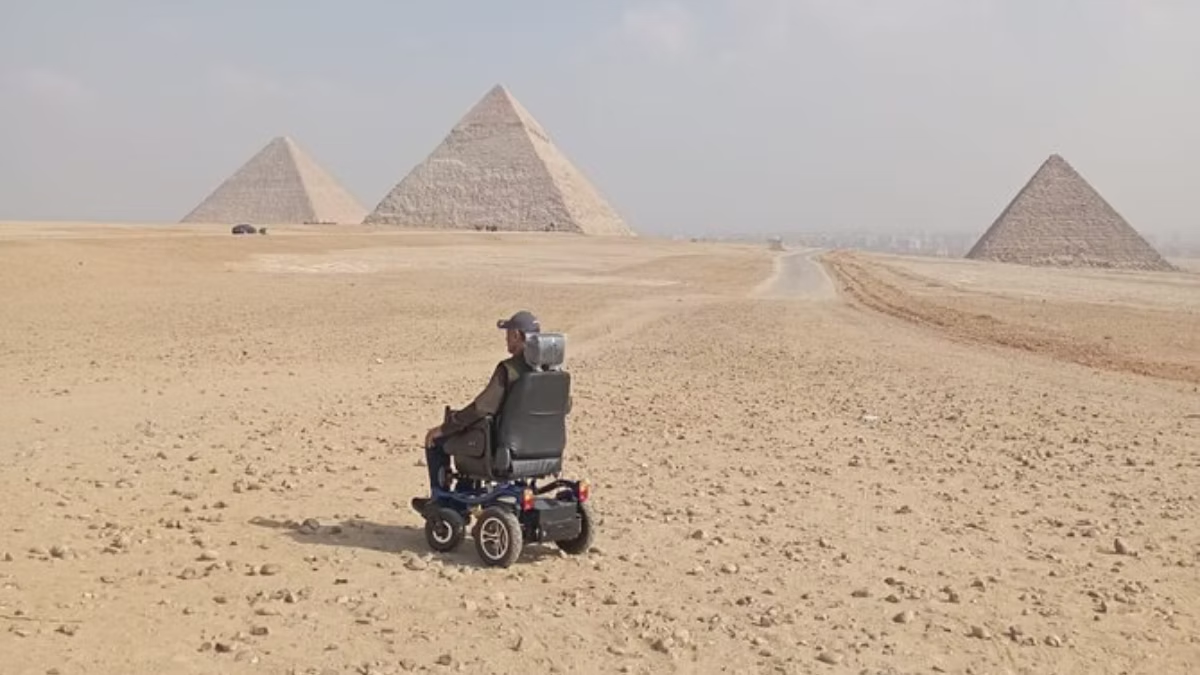
The Pyramids of Giza present significant accessibility challenges. The Giza Plateau has unpaved sandy and rocky terrain that is largely impassable for standard wheelchairs without assistance. The pyramid interiors involve steep, narrow climbing passages entirely unsuitable for wheelchair users or visitors with significant mobility impairments. However, the main monuments — including the exterior of all three pyramids, the Sphinx enclosure, and the panoramic viewpoint — can be reached by vehicle on the internal site roads, making a meaningful visit possible for visitors with mobility limitations who have private transport. Early planning and a private tour are strongly recommended.
Visiting the Pyramids of Giza with a disability or mobility impairment requires honest preparation. The site is one of the most extraordinary places on earth, and a visit is absolutely achievable for many visitors with mobility challenges — but it requires understanding the genuine constraints of the terrain and planning accordingly. This guide gives a clear, accurate picture of what is and is not accessible, and how to plan the most meaningful possible visit.
Terrain and Surface Conditions
The Giza Plateau is a desert archaeological site. The surface between monuments is primarily sand, compacted earth, and uneven stone paving. There are no smooth paved paths between all monuments — the internal site roads are compacted gravel and sand, accessible to vehicles but challenging for standard wheelchairs without assistance.
Standard manual or electric wheelchairs can access the Giza Plateau via the internal vehicle roads, which circle between the main monuments. Self-propelling on sandy terrain is not possible without assistance. The most practical solution for wheelchair users is to travel by private vehicle between monument viewpoints on site, dismounting (with assistance if needed) at each location to view the monument from a stable, close-range position. A private tour with a dedicated vehicle on site makes this manageable.
What is accessible by vehicle:
- The main entrance and ticket area
- The viewpoint area facing the Great Pyramid and Pyramid of Khafre
- The Sphinx enclosure entrance (with some uneven paving on approach)
- The panoramic desert viewpoint to the south
- The Solar Boat Museum entrance (paved approach)
What requires walking on uneven terrain:
- The base perimeter of each pyramid (full circumnavigation)
- The Queens’ Pyramids area
- The Valley Temple interior
- The lower Sphinx terrace at its closest approach point
Pyramid Interiors: Accessibility Assessment
The interiors of the Great Pyramid, Pyramid of Khafre, and Pyramid of Menkaure are not accessible to wheelchair users or visitors with significant mobility impairments. The ascending passages involve a steep incline (approximately 26 degrees), a ceiling height that reduces to approximately 1.2 metres in places requiring sustained stooping, and wooden ramp-and-step surfaces with handrails.
The interior experience is also not recommended for visitors with:
- Severe claustrophobia
- Heart or respiratory conditions
- Significant balance or coordination impairments
- Anxiety in enclosed, warm, and narrow spaces
For visitors who cannot access the interiors, the exterior experience of the Great Pyramid — including approaching the base, observing the original casing stones, and understanding the scale of the structure — is genuinely impressive and does not require any climbing.
The Sphinx Enclosure
The Sphinx enclosure has a paved pathway at the upper terrace level that is accessible with assistance on a standard wheelchair. The lower terrace — which provides the closest approach to the Sphinx — involves a descent via stone steps that are not wheelchair accessible. The upper terrace viewpoint provides a clear, close sightline to the Sphinx and is the recommended viewing position for wheelchair users.
The Solar Boat Museum
The Solar Boat Museum has a paved entrance approach and an elevator to the upper viewing level where the restored Khufu Ship is displayed. This is one of the most accessible attractions at the Giza complex and is recommended for visitors with mobility limitations. For full details, see our Solar Boat Museum guide.
Planning a Private Accessible Tour
A private tour with a dedicated vehicle is strongly recommended for visitors with mobility impairments. This format allows:
- Transportation between monument viewpoints by vehicle, eliminating long walks on sandy terrain
- A guide who can adapt the itinerary to your mobility and energy levels
- Flexible pacing — more time at accessible viewpoints, skipping sections that are physically impractical
- Assistance with boarding and alighting the vehicle at each stop
When booking a private tour, inform the operator of your specific mobility requirements in advance. Reputable operators can arrange appropriate vehicles and ensure the guide is briefed on pacing and terrain considerations. See our private vs group tours guide for more on the private format.
Sensory and Cognitive Accessibility
Visual impairments: The tactile experience of approaching the base of the Great Pyramid and placing your hands on the ancient stone blocks is genuinely meaningful for visitors with visual impairments. A knowledgeable guide who describes the visual environment verbally significantly enhances the experience. Audio guides are not currently widely available at the Giza complex; a private Egyptologist guide is the recommended solution.
Hearing impairments: Most tour operators can arrange guides who communicate clearly for visitors with hearing impairments. Sign language interpretation is not routinely available but may be arranged with advance notice through specialist accessible travel operators.
Cognitive and neurodivergent visitors: The Giza Plateau is a large, open, largely unstructured environment — different in character from the enclosed, regulated environment of a conventional museum. For visitors who benefit from quiet, predictability, and clear advance planning, the early morning window (8:00–10:00 AM) on a weekday provides the calmest, least crowded conditions. A private tour with a patient, experienced guide removes unpredictability from the visit significantly.
Practical Checklist for Accessible Visits
- Book a private tour and disclose mobility requirements to the operator in advance
- Confirm the vehicle used has appropriate boarding assistance if needed
- Visit at 8:00 AM opening for the calmest and coolest conditions
- Carry any personal mobility aids, medications, and medical equipment needed
- Confirm accessible toilet facilities with your tour operator in advance (limited on site)
- Wear comfortable, supportive footwear suitable for sandy terrain
- Carry significantly more water than you think you will need — dehydration risk is higher for visitors expending more physical effort on transfers
Frequently Asked Questions
Is the Pyramids of Giza site wheelchair accessible?
The Giza Plateau has significant accessibility challenges due to sandy, rocky, and unpaved terrain between monuments. However, wheelchair users can access the main viewpoints and monument exteriors via the internal site roads by private vehicle. Self-propelling a standard wheelchair across the sandy terrain without assistance is not practical.
Can wheelchair users enter the pyramids?
No — the interiors of all three pyramids are not accessible to wheelchair users or visitors with significant mobility impairments. The ascending passages are inclined at approximately 26 degrees, with ceiling heights that drop to around 1.2 metres, requiring sustained stooping. The exterior of the Great Pyramid is an impressive and meaningful experience in its own right and does not require any climbing.
What is the most accessible attraction at the Giza complex?
The Solar Boat Museum is the most accessible attraction at the Giza complex — it has a paved entrance approach and an elevator to the upper viewing level where the restored Khufu Ship is displayed. The Sphinx upper terrace viewpoint is also accessible with assistance on a standard wheelchair and provides a clear, close sightline to the monument.
Should visitors with mobility impairments book a private tour?
Yes — a private tour with a dedicated vehicle is strongly recommended for visitors with mobility impairments. This allows transportation between monument viewpoints by vehicle, flexible pacing, and a guide who can adapt the itinerary to your energy and mobility levels. Inform the operator of your specific requirements in advance so they can arrange appropriate vehicles and briefing for the guide.
Can visitors with visual impairments have a meaningful experience at the Pyramids?
Yes — approaching the base of the Great Pyramid and physically touching the ancient stone blocks is a genuinely meaningful tactile experience for visitors with visual impairments. A private Egyptologist guide who provides detailed verbal description is the recommended solution, as audio guides are not currently widely available at the Giza complex.
What is the best time to visit the Pyramids of Giza for visitors with cognitive or sensory sensitivities?
The early morning window from 8:00–10:00 AM on a weekday provides the calmest, least crowded, and coolest conditions at the Giza Plateau. This opening period significantly reduces unpredictability and sensory overload. Combining this timing with a private tour and a patient, experienced guide further minimises surprises and allows for flexible pacing throughout the visit.
Are there accessible toilets at the Pyramids of Giza?
Accessible toilet facilities on site are limited and not guaranteed at all locations across the Giza Plateau. Visitors with accessibility requirements should confirm toilet arrangements with their tour operator in advance before the visit. Private tour operators familiar with the site will be able to advise on the most practical facilities available.
